
Note to the reader: I don’t want to minimise racism or excuse historical harm. I am exploring how to responsibly engage with ideas shaped in colonial contexts at a moment when complex moral questions are often flattened into binaries.
I had been enjoying reading and writing my series on occultist Dion Fortune’s ‘Applied Magic’ in anticipation of creating an upcoming podcast episode for ‘She Speaks Volumes’. Yesterday, a respected friend and colleague sent me an email stating that Dion Fortune was a racist, that she would not support my project, and cautioned me against becoming exclusive. This immediately changed how I felt about Dion Fortune, my work, my thinking, and my role as a producer/creator.
So far in my readings of Fortune’s work I have not yet come across any racist or homophobic statements, but is it possible that I didn’t notice her bigotry? I wasn’t reading through the lens of inclusivity, but archaic notions of colonialism do tend to stand out these days. I am not BIPOC so it is possible that racist/homophobic subtext or biases could go undetected. I did discover a claim of homophobia against her when I searched for other claims of racism – but no concrete examples.
I have not replied to the email yet, I still have a lot of thinking to do. As far as I know Dion Fortune did not actively lobby for white supremacy. To be clear, I don’t want to excuse racist attitudes, only to ask if there is a distinction between someone who was actively working to promote white supremacy and someone who may have held terrible beliefs that were more widely held in her era.
My primary question is, can we in good conscience explore and use the work of someone who held views in the past that would be considered racist today? That question produces a lot of other questions. What is a racist? Who gets to decide who a racist is? Do we dismiss all works by anyone who ever held a colonial belief? Is there any room to use the knowledge of past thinkers in a post-colonial context?
I feel that a black woman is more qualified to identify racism than I am but I don’t feel this absolves me of the responsibility to make up my own mind. It is important for me to listen, and respect the views of others but I cannot abdicate my own perspectives without interrogation.
I can support the idea that if Dion Fortune’s racism was her primary ideology then using he work would be offensive. This draws parallels to Leni Riefenstahl, the filmmaker who directed ‘Triumph of the Will’ for the nazi party. There is no doubt that Riefenstahl was a brilliant director, and one of the very few examples of early women directors. Riefenstahl’s reputation won’t shake the spectre that she was aware of the practices of the nazis. Personally I find it implausible that she wouldn’t know. She has denied all knowledge of genocide, but considering the first camp (Nohra) was built in 1933, a few weeks into Hitler’s instatement as chancellor, and the fact that Riefenstahl made Triumph of the Will in 1934. Film takes enormous amounts of research, she must have known.
As far as I understand Fortune’s racism was not active in the sense that she politically campaigned, or acted in any way to limit the social, cultural. political, or economic powers of anyone. As a woman of the Fin de siècle it is entirely possible that she assumed the supremacy of white people as a default. She was born into financial as well as social privilege and she likely never had any reason to question her position or how she benefitted at the expense of others. Her family had an arms factory in Yorkshire where the family fortune was made, as far as I know there was no slavery involved – though I am sure the working conditions were dire.
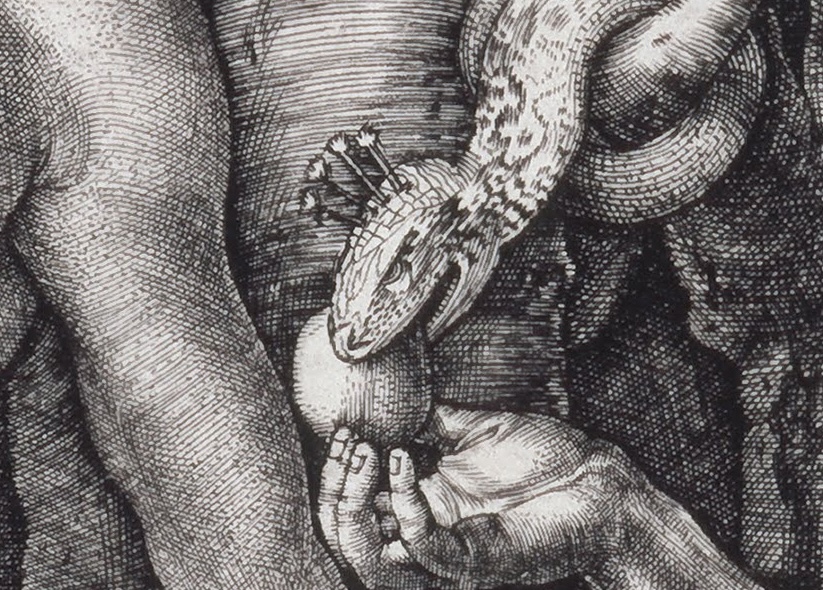
So what shall I do? One cannot deny that ‘colonialism’ is just a sanitised way of saying ‘racist’, but is any and all knowledge from our ‘colonial’ past ‘fruit of the poisonous tree’? Or, can we use this fruit to seed a more equitable future?
I am for the latter. Unless one is passing on bigotry then I think the ideas, art, and discoveries of those who have held beliefs instilled in them by their zeitgeist can be used out of context to enrich our present and future.
I realize my thinking here is not exhaustive of the subject. We all need to make conscious choices, and the choices we make will likely shift from context to context. The past is murky but if we do not accept it, and take what we can from it, we will not evolve. Perhaps we all need to decide what we find racist. Perhaps there are those that will believe I am racist based on what I have said here, but that will likely change over time and from reader to reader.
Tomorrow I will continue with my ‘Applied Magic’ series and see what happens next.