Eating the fruit….
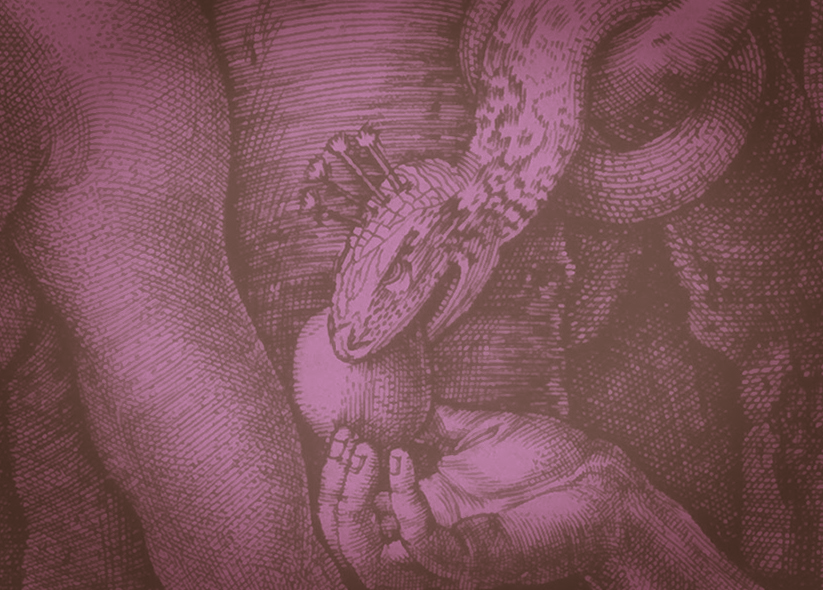
Last year I had written a post about the complexities of inheriting colonial knowledge called, The Fruit of the Poisonous Tree. Since then I have discovered additional information and have been working on a framework for evaluating ‘tainted sources’.
To sum up the previous post, I had been working on a podcast episode for She Speaks Volumes about the occultist Dion Fortune when I was told by a friend that Fortune was a racist. I couldn’t find any evidence of this, nor any other claims of racism against Fortune, but the accusation stopped my momentum on the episode.
Last week I revisited that project, and there it was – in print, in the glossary of Applied Magic the very book I had been reading for the podcast. …irrefutable proof of Fortune’s belief in white-supremacy. So, now what? Drop the episode and contribute to erasing women from occult history? Produce the episode and ignore the racism, consequently ‘whitewashing’ history or produce the episode and ‘apologise’ for Fortune’s ignorance as being ‘of the era’? I feel what we need is a process to apply to ‘tainted sources’ to help determine if the source can be used with integrity or not.
It feels that so much of our day-to-day consciousness is shaped by sensationalist media, and particularly social-media, which flattens complex issues to simplified polarities. We see posts on facebook, or read a headline and jump to conclusions, we get stuck in ‘media bubbles’ and suffer from confirmation bias. It is easy to be lured into taking a ‘side’, when a more nuanced perspective could lead to a richer understanding of our world.
My instinct tells me to produce the episode as I am building a catalogue of female philosophers, and writers, particularly women prior to 1970 that practiced alchemy, worked with the occult, or had ‘an unmediated relationship to the divine’. I want to know much more about how women experience magic, and universal consciousness or god. We have comparatively very little written records by women about this before the 1970s.
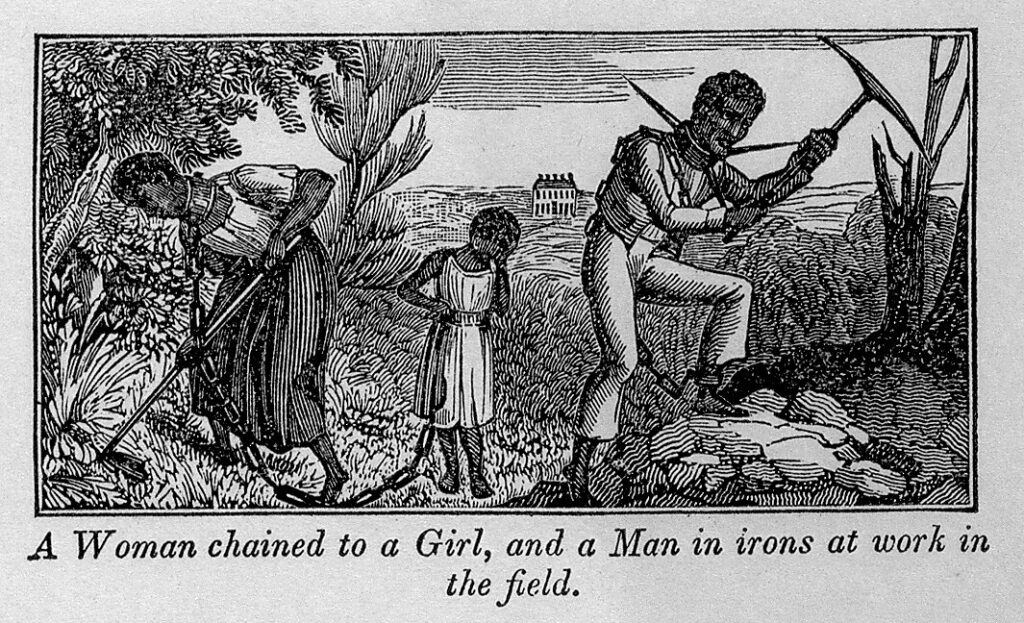
Yet, I am also aware that there is material harm inflicted on black, and brown people globally by the ideas of white supremacy. Racism is obscurantist. It is a a fear born from an ignorance that can’t be excused on a spiritual or intellectual level in any era. Curiosity, evolution, and civility are the hallmarks of enlightened thinking (IMHO).
The phrase ‘Fruit of the Poisonous Tree’ is a specific legal term in the USA, which denies the inclusion of evidence obtained through illegal searches and confessions.
This is from the wikipedia entry. The doctrine has four exceptions that protect justice professionals from being penalised when they are not directly at fault.
- It was discovered in part as a result of an independent, untainted source; or
- It would inevitably have been discovered despite the tainted source; or
- The chain of causation between the illegal action and the tainted evidence is too attenuated; or
- The search warrant was not found to be valid based on probable cause but was executed by government agents in good faith (good-faith exception).
If we consider knowledge, inspiration, or ideas from artist, writers, of thinkers that are compromised by ideologies and even actions, then perhaps these exclusions can offer a framework for how we might evaluate how, and if, we use their work. These exclusions can protect human knowledge, and the integrity of authors, artists, and scholars who are not promoting or perpetuating systems of harm.
- Source is Independent of Harm In the context of studying or referencing works from ‘tainted sources’, this doctrine could be applied internally. For example; has the work been produced independently of their harmful behaviours or ideologies? Or, by using their work are you further promoting harm?
- Are there other sources of this knowledge or work that can be reasonably substituted as primary sources? Would not using the source materially reduce the availability of information, or perspectives on the subject?
- Intended use? Are you referencing specific passages, or ideas or promoting the author as a person? Is the work contextual?
- How indoctrinated was the author in harmful ideologies or behaviours? Were they actively causing harm? Promoting harmful ideas? Are they primarily known for this?
In Fortune’s case, the work I am using Applied Magic, can be applied to the **The Fruit of Poisonous Tree framework like this:
- Source is independent of harm: I am not using any of Fortune’s ideas of white supremacy, nor am I using any ideas she developed from concepts of white supremacy. I could only find one reference to her belief in white supremacy in her works. There is no ‘allowed number’ but it illustrates that white supremacy was not central to her work.
- There are no other sources that can be substituted because my work is examining Fortune’s contribution to occultism. While many women participated in esoteric movements prior to 1960, very few produced self-authored, systematised works on occult ideology that survive as primary texts. To omit Fortune’s work from the archive of female-centred esotericism and magic would materially weaken my line of study.
- My intended use is to contribute more evidence and examples of female agency in magic and the occult.
- I cannot find any evidence that Fortune actively pursued white supremacy. Her ideas were in-keeping with many white Europeans of the day. This is not an excuse, but it does provide context to her ideologies.
It is easy to dismiss ‘cancel-culture’ as ‘woke’, but it is not overly pedantic to question the source of information. We are where we are today because media, education, and the means of production have historically been concentrated in the hands of a few. It’s particularly important to consider the source if the source is rare – such as in the written records of women.
I am going to complete my She Speaks Volumes episode on Dion Fortune because Fortune’s racism is not central to her occult writings. I don’t think Fortune’s behaviour or ideologies even comes close to many of the men who are canonised throughout science, philosophy, art, literature and politics. I don’t see why we should hold Fortune to a higher standard than we do Carl Jung, Ezra Pound, Michel Foucault, William Burroughs, Mircea Eliade, or W.B Yeats or many of the other men still celebrated today.